Poultry feed lines
5–30 t/hLine capacity
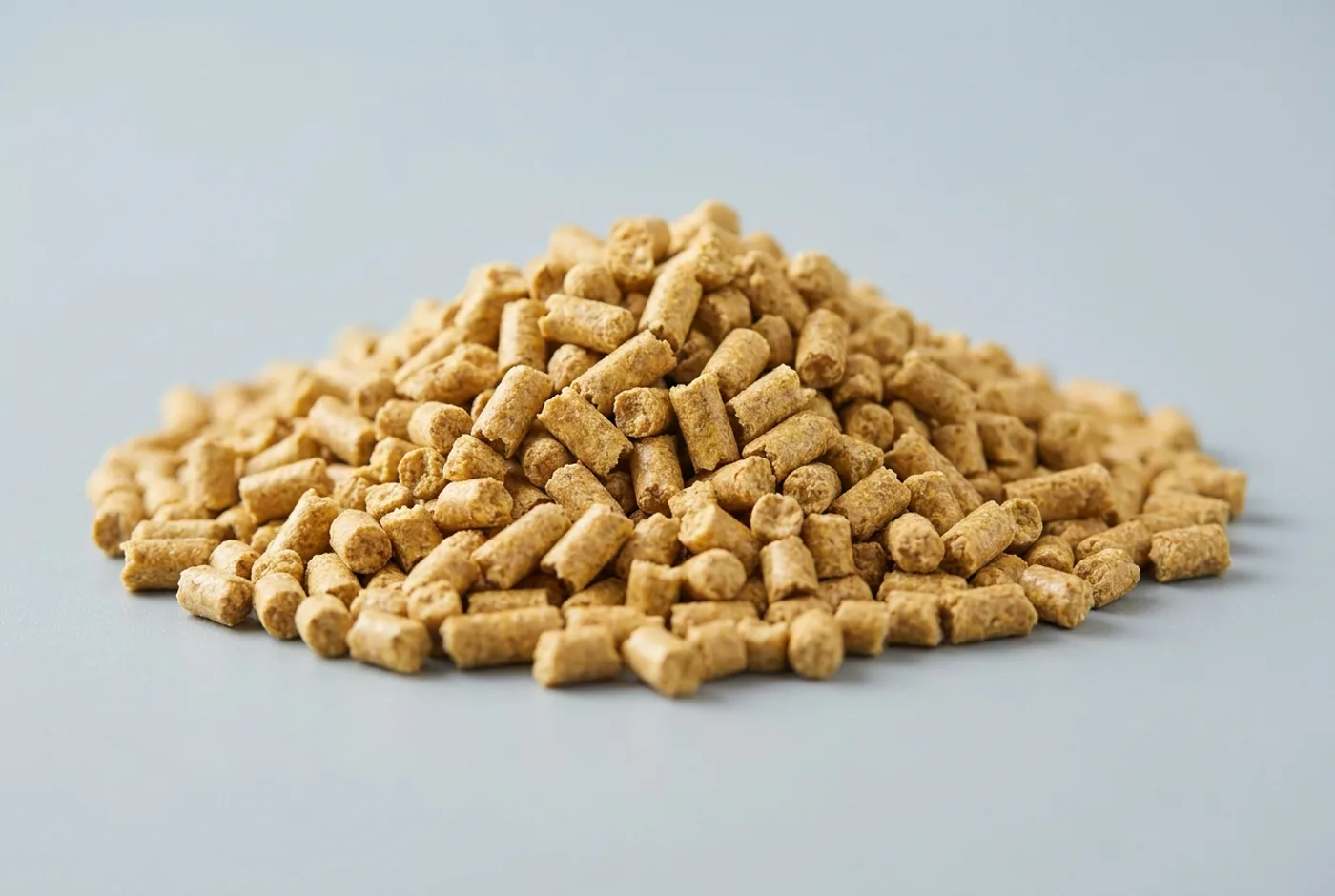
Broiler and layer plants live on two numbers: pellet durability and cost per tonne. The line is built around a long conditioner and a pellet mill with enough die area to hold quality at full rate, followed by a crumbler for starter feed. Fines return to the mill instead of reaching the bird.
| Finished product | Pellet 2–4 mm and crumble |
|---|---|
| Conditioning temperature | 80–85 °C |
| Pellet durability (PDI) | ≥ 95 % |
| Finished moisture | ≤ 12.5 % |
Swine feed lines
5–30 t/hLine capacity
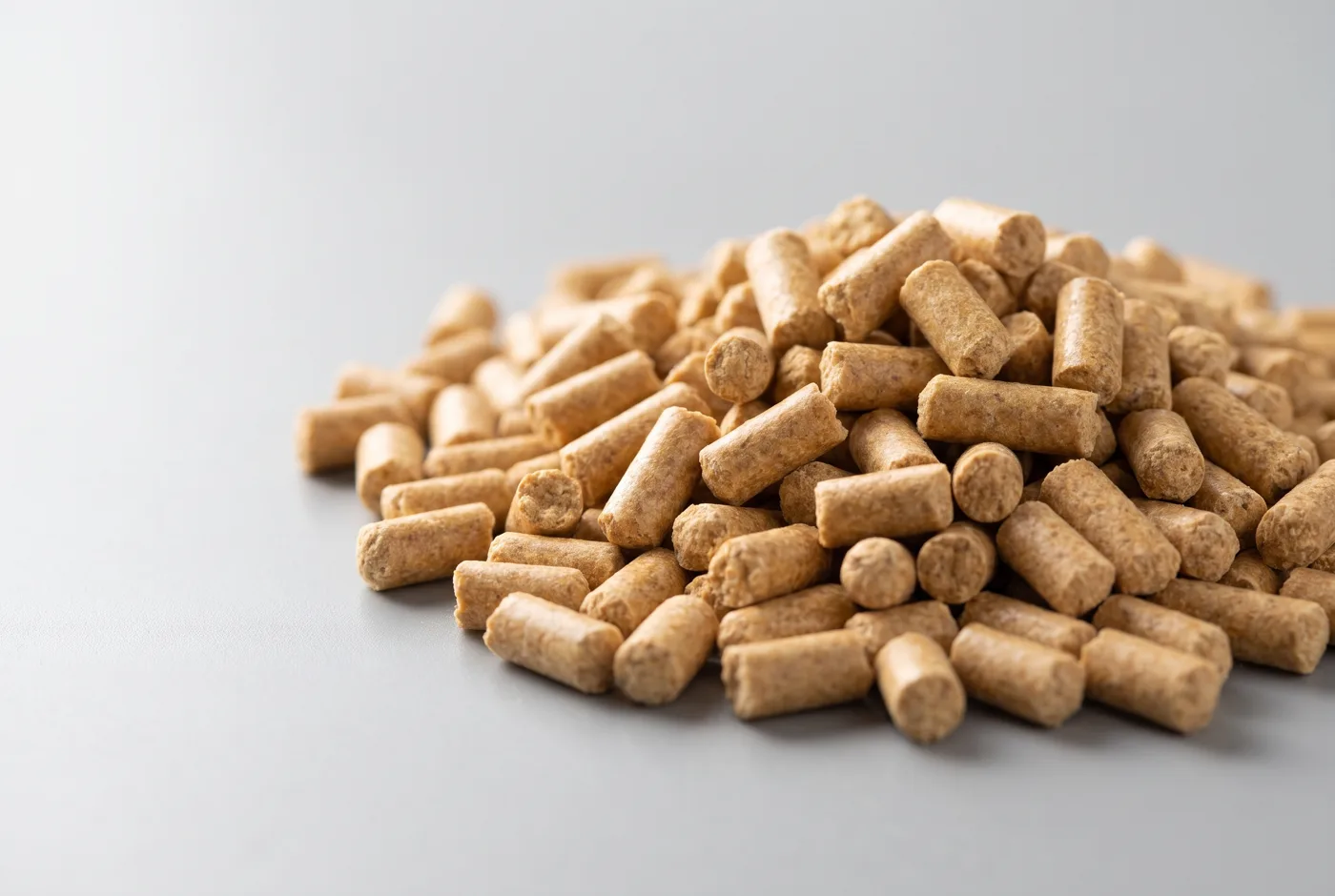
Pig plants usually run both mash and pellet from the same mill, and often switch recipe several times a shift. The line is laid out for fast, clean changeover: bomb-bay mixer discharge, short transfer runs and a control system that keeps every batch traceable to its formula.
| Finished product | Pellet 3–5 mm or mash |
|---|---|
| Conditioning temperature | 75–85 °C |
| Mixing uniformity (CV) | ≤ 5 % |
| Recipe changeover | Under 10 min, batch traceable |
Ruminant feed lines
5–20 t/hLine capacity
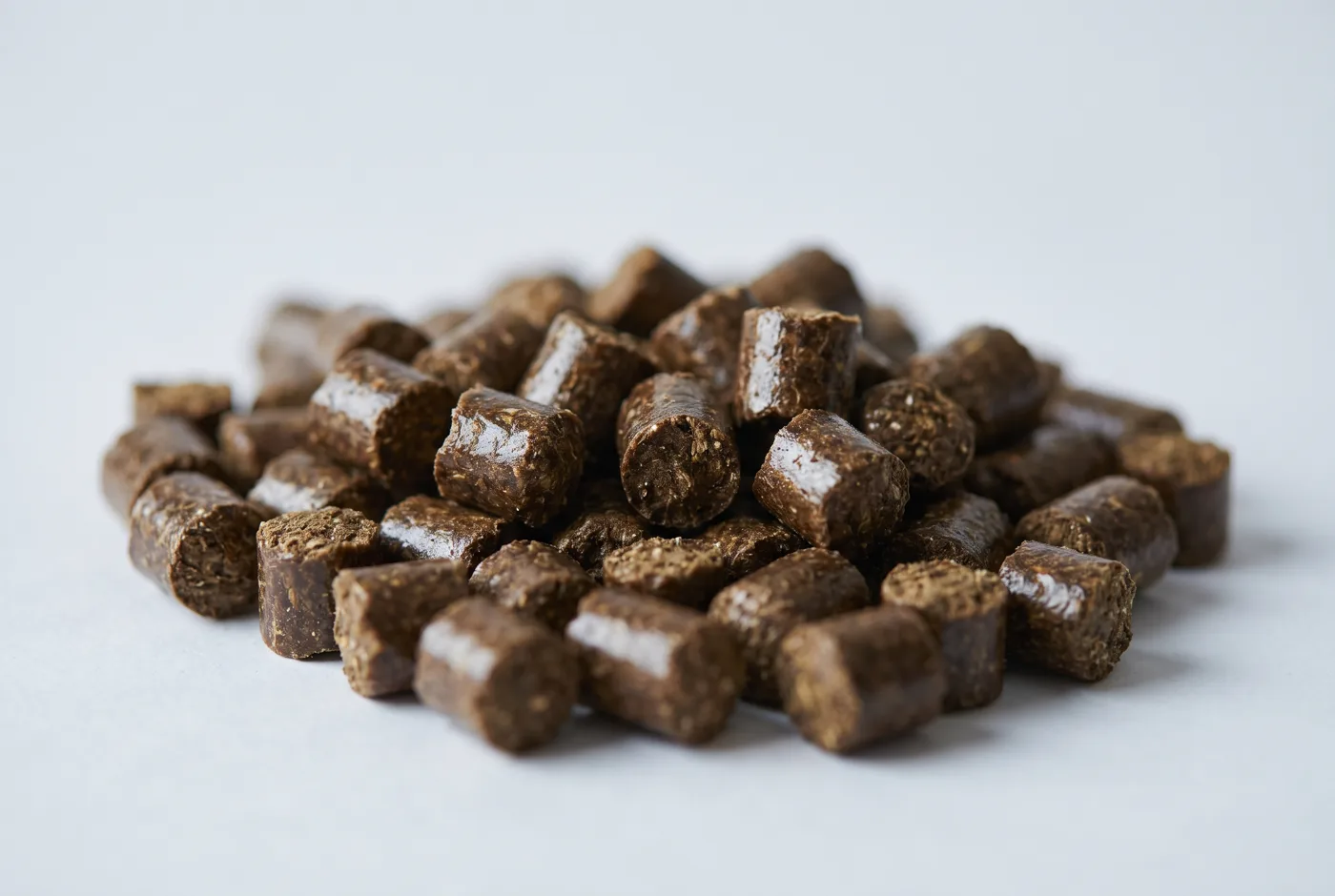
Cattle rations are fibrous and carry molasses, which is what makes them hard on equipment: the mix goes sticky, bridges in hoppers and coats the die. This line is built for that — a dedicated molasses mixer, a dual-cylinder conditioner and a large die that keeps a big pellet together.
| Finished product | Pellet 6–12 mm |
|---|---|
| Molasses addition | Up to 8 % |
| Fibre content | High-fibre rations, straw and hulls |
| Conditioning temperature | 80–90 °C |
Aqua feed lines
1–10 t/hLine capacity
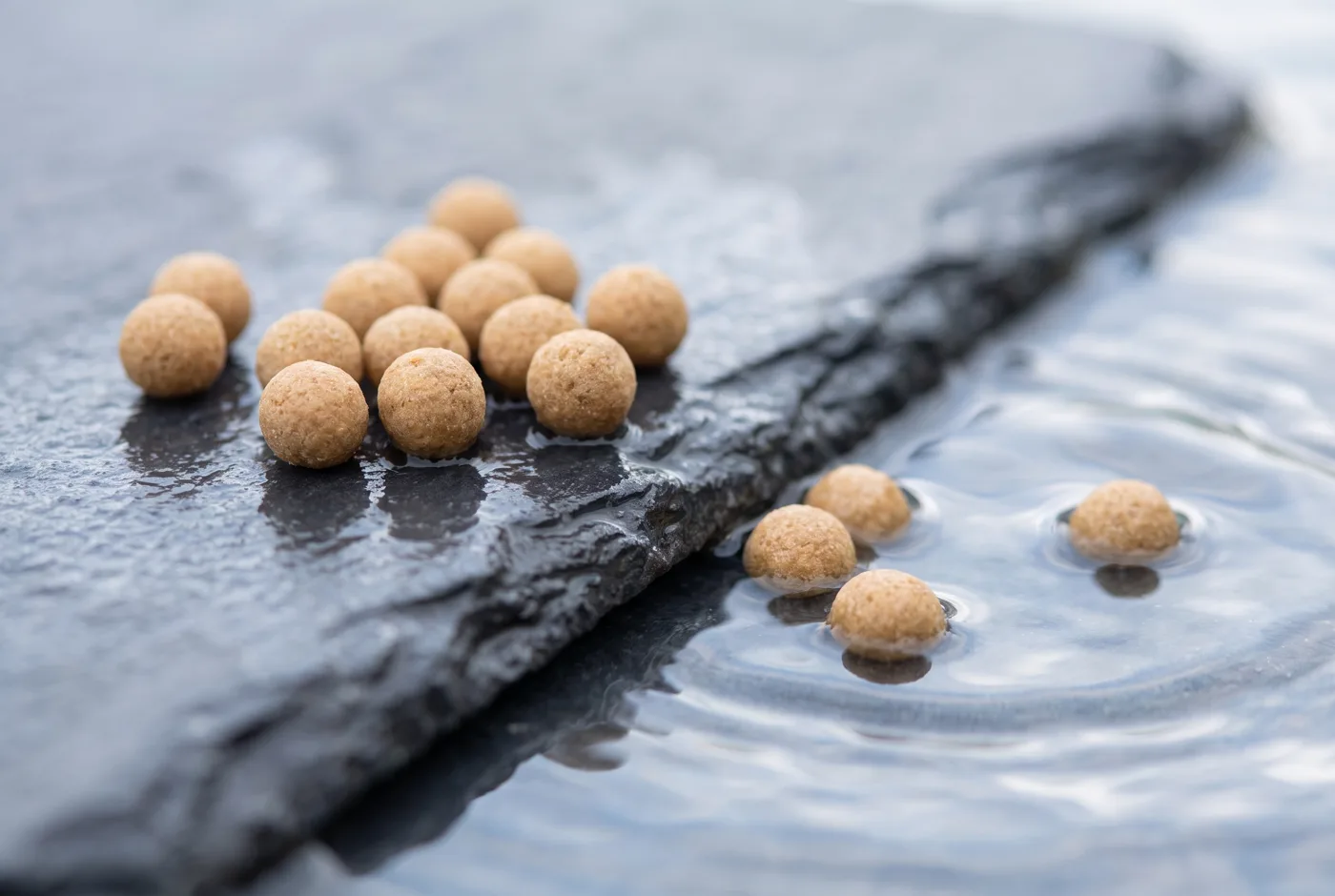
Aqua feed is judged in the water, not in the bag: a pellet that breaks up before the fish reaches it is money on the pond floor. The line grinds to micro-fineness, extrudes to set density — floating or sinking — and coats oil under vacuum so it soaks in instead of sitting on the surface.
| Finished product | Extruded pellet 0.8–12 mm |
|---|---|
| Density control | Floating, slow-sinking or sinking |
| Water stability | ≥ 2 h depending on formula |
| Raw material fineness | 60–120 mesh |
Pet food lines
0.5–6 t/hLine capacity
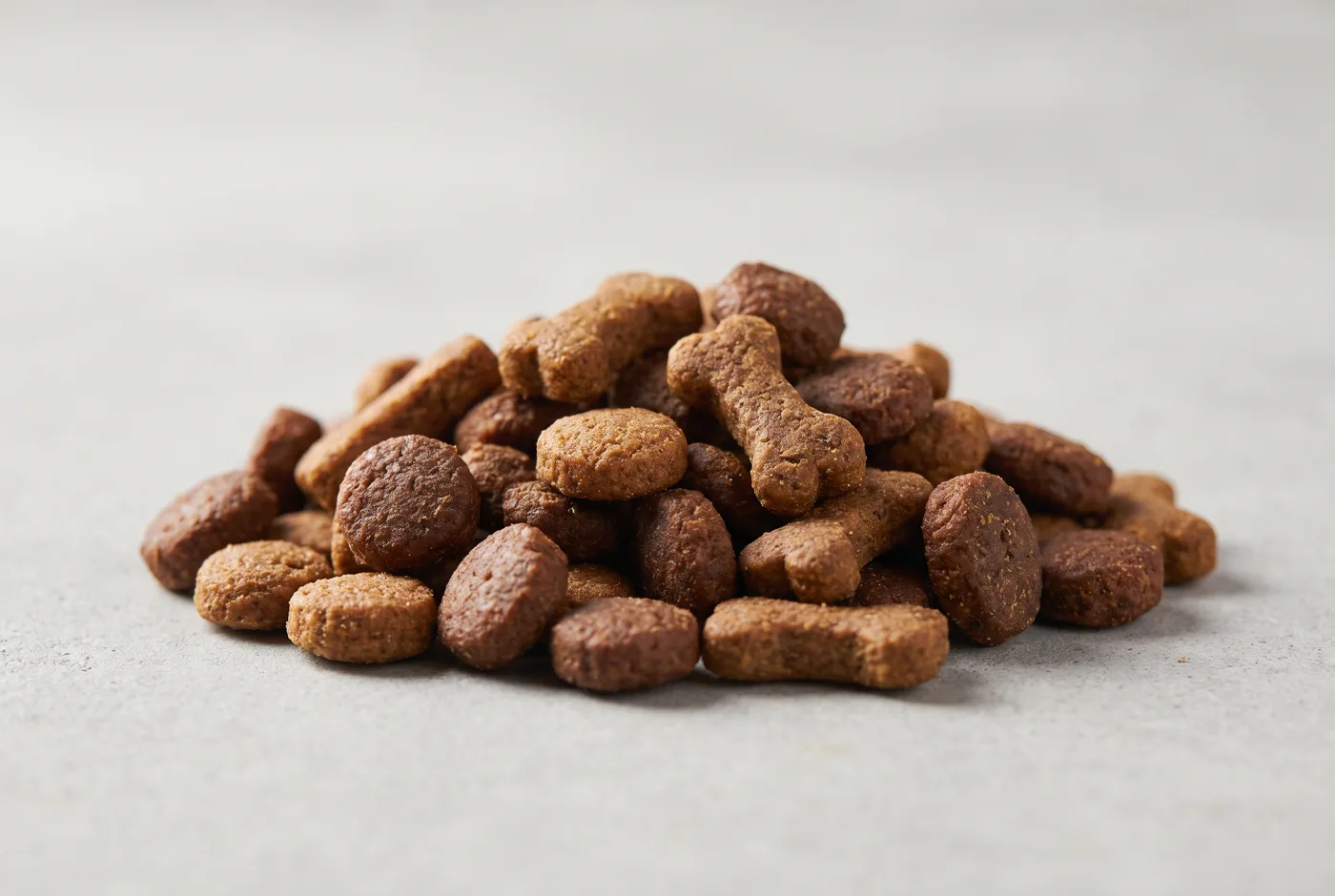
Pet food is a consumer product: the buyer looks at the kibble. Shape, colour, density and how the coating sits on the surface are all commercial decisions, and each one is a setting on this line. Fresh meat goes in at the extruder; fat and palatant go on under vacuum, so the piece stays dry to the touch.
| Finished product | Kibble 3–20 mm, multiple shapes |
|---|---|
| Fresh meat injection | Up to 25 % |
| Vacuum coating | Fat and palatant up to 30 % |
| Contact parts | Stainless steel, hygienic execution |
Premix & concentrate lines
1–10 t/hLine capacity
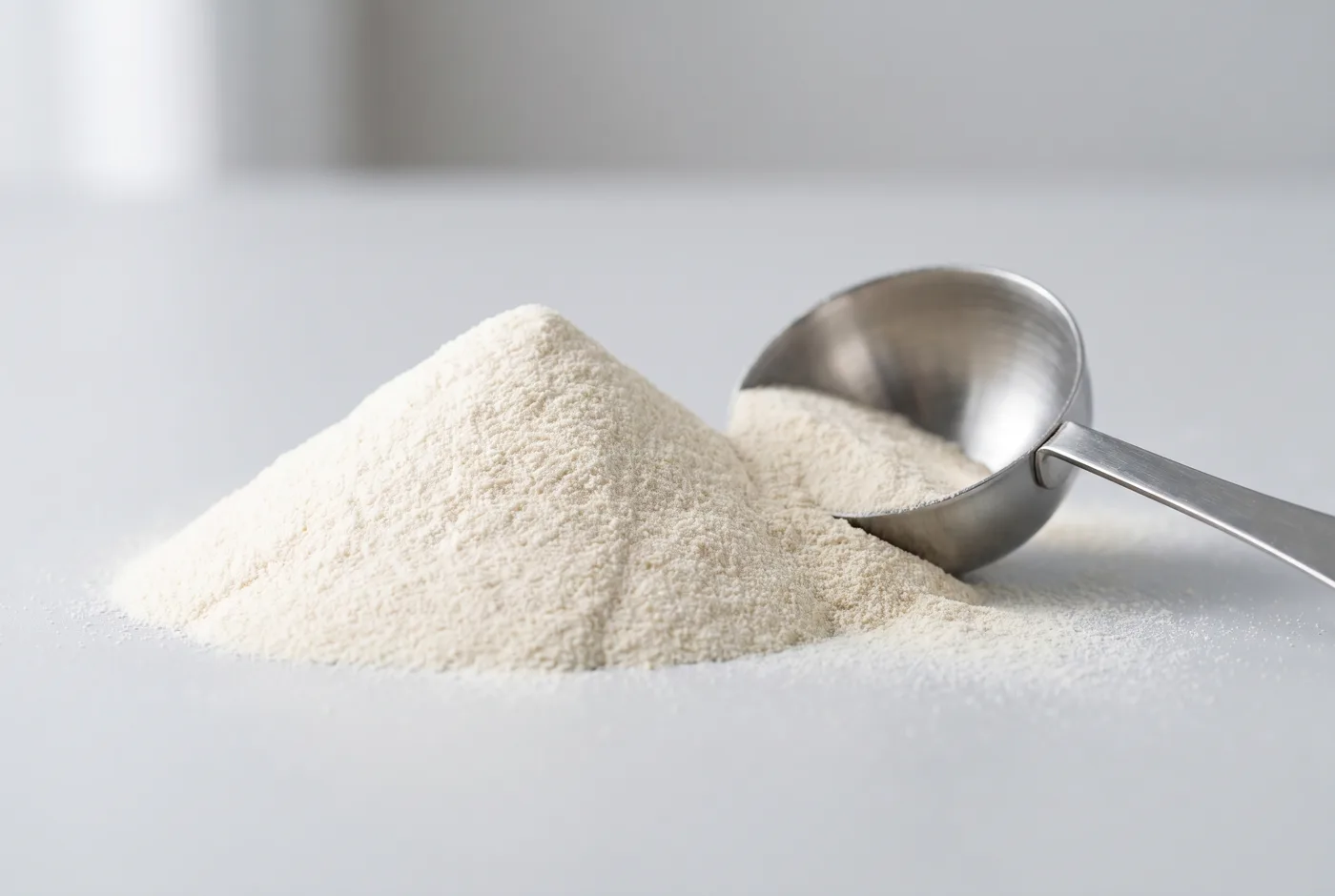
In premix the product is measured in grams, not tonnes, and the whole plant exists to protect one number: dosing accuracy. Micro-ingredient stations weigh by loss-in-weight, the mixer holds a CV under 5 % on additions below one per cent, and every batch leaves a record.
| Finished product | Vitamin / mineral premix, concentrate |
|---|---|
| Dosing accuracy | ≤ ± 0.5 % |
| Mixing uniformity (CV) | ≤ 5 % on micro additions |
| Cross-contamination | Full-discharge mixer, purge sequence |
Tell us the tonnage and the recipe
Send us what you need to produce, how much of it per hour and where the plant will stand. Our engineers come back with a process flow, an equipment list and a layout — not a price list.
Request a line study